We are closed on Thursday 25th April 2024 or Anzac Day Public Holiday, and no deliveries will be made.
Last delivery date: Wednesday 24th April 2024
For deliveries on Wednesday 24th April 2024, please refer to our Shipping Page to know your respective cut-off times for same-day dispatch. All orders after the respective cut-off times will be dispatched on the next working day.
We will resume operations on Friday 26th April 2024.
We’ve worked hard to find and source rapidly renewable, reclaimed, plant-based raw materials. The best alternatives to regular plastic we have available right now.
But we’re not stopping there. We also invest in innovative, sustainable materials and customisation technology to expand and improve our packaging range in the future.
Aqueous
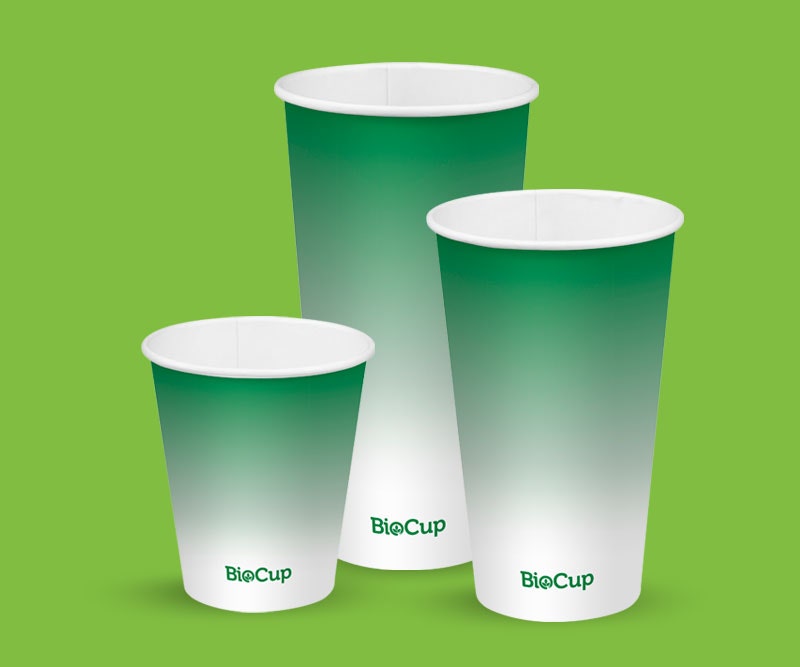
Finally, home compostable cups are here. Aqueous cups are manufactured using a unique waterproof barrier coating, reducing the material needed. Each cup is leakproof and durable.
PLA (short for polylactic acid) is a type of bioplastic made from plant-based resources like corn. Biopak’s PLA products are certified industrially compostable.
The Forest Stewardship Council (FSC™) logo means our wood is sourced from responsibly managed forests – taking into account water use, energy use, community support and more.
Getting to know new materials can be confusing, so we understand if you’ve still got a few questions. Here are some of our most common.
How do I know what materials are recyclable?
Always check your packaging. BioPak together with The Australian Packaging Covenant Organisation (APCO) can advise you if an item can or cannot be recycled in Australia. APCO are the only source of truth when determining recyclability in Australia – there’s NO other way to claim an item is recyclable other than using APCO's Prep tool. For this reason, we use APCO's PREP tool for all our products at BioPak.
How do I know what materials are compostable?
To ensure a product is compostable, it needs to undergo a rigorous test and hold a compostability license number. In Australia, the certification body that does that is the Australian BioPlastics Association (ABA). Their website has a list of companies and products that are certified. If a product is not on this list, it’s not certified compostable in Australia. Watch out, some products may claim that they ‘adhere’ to compostability standards, but it is not the same as being certified, as the product didn't undergo ABA's testing regime. Make sure to look for both the compostability logo on the product and, more importantly, the product's specific licence number.
How do I know if packaging is created from responsibly sourced materials?
Check for proof of claims and supply chain transparency. At BioPak, we
Source wood and paper from FSC™ certified forests.
Leverage our B Corp certification.
Partner with manufacturing facilities certified to ISO 14001 Environmental Management Systems, or are in the process of applying for certification.
Does BioPak use materials with PFAS?
BioPak, like all of our competitors, have traces of PFAS in some of our BioCane products. However, we have a growing range of no added PFAS fibre products. We’re on track to completely phase out PFAS in our production by June 2024 – this will make us the first in our industry.
What material can we expect to see next?
We’re committed to constant improvement, for people and the planet. Within the next 12 months, we plan to launch a plant-based and home compostable bioplastic called PHA – a new material that will be certified to biodegrade even in marine settings. This will truly revolutionise the packaging industry.
Start Composting at Your Foodservice Business
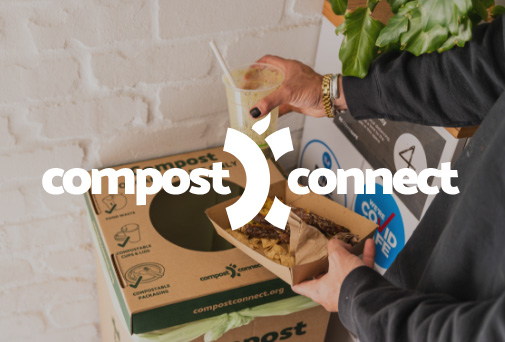
Compost Connect is a not-for-profit platform connecting foodservice businesses to commercial organic waste pick-up services. With 23 compost partners servicing 2,200+ postcodes across Australia and New Zealand, you can search your postcode to find out if compost collection is available in your area.
We launched Compost Connect to take responsibility for where our packaging ends up. Food and organic waste decomposing in landfill emits methane, a greenhouse gas that’s on average 28 times more potent than CO2. By joining Compost Connect, you’ll be diverting waste from landfill, reducing emissions, showing your commitment to environmental sustainability, and turning your food and packaging waste into nutrient-rich compost!
Start Composting at Your Business
Compost Connect is a not-for-profit platform connecting businesses to compost pick up services. Search your postcode to find out if compost collection is available in your area.
By joining Compost Connect, you’ll be diverting waste from landfill, reducing greenhouse gas emissions, showing your commitment to environmental sustainability, and turning your food and packaging waste into nutrient-rich compost!