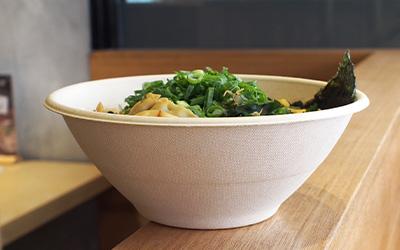
Bagasse (also known as sugarcane pulp) is the fibrous substance that remains after the sugarcane plant is harvested for its juice. Today, we’re able to turn this agricultural byproduct into packaging that looks just like moulded cardboard.
At BioPak, we combine this sugarcane pulp with other plant-based pulp to create what we call ‘plant fibre.’ This creates our BioCane range — an extremely versatile, strong and inexpensive solution. Now supermarket brands and quick service restaurant chains are jumping on board. And for good reason.
Our plant fibre is plastic free.
Bagasse is a rapidly renewable agricultural byproduct.
Home Compostable Solution – Here’s What you Need to Know
Our BioCane packaging is plastic free and, in many cases, home compostable — this is marked on each product page on our website. This is an exciting opportunity to move away from conventional plastic packaging and close the loop on waste.
Being a plant fibre, our compostable BioCane range can be returned to earth as soil food (compost), which can then be used to grow more plants. Compost also helps improve soil quality, retain water and ultimately make the land more drought resilient.
Our certified compostable BioCane will biodegrade within 40-90 days when composted at home or an industrial compost facility.
Why aren’t all BioCane products home compostable? Some meals require greater grease resistance than others. Traditionally the foodservice industry has been using PFAS, a greaseproof additive, as a solution. Plant fibre packaging with added PFAS can’t be home composted. We are actively committed to removing added PFAS from our products by June 2024. Read More >
Get To Know Bagasse
Is bagasse recyclable?
BioPak’s plant fibre packaging is suitable for recycling along with cardboard as long as it’s clean and no food residue remains. Recycling is a good end-of-life solution for our produce trays. Check with your local council to find out more and stay updated with the latest recycling information.
Is bagasse renewable?
Yes, sugarcane is a rapidly renewable and widely available resource due to its fast-growing nature and ability to be harvested annually.
According to the Food and Agriculture Organisation (FAO), 1.9 billion tonnes of sugarcane were harvested worldwide in 2020 - with only 30 percent of the crop utilised for sugar based products.
As a result, using bagasse as a renewable resource for packaging contributes significantly to waste reduction in agricultural waste, increases the value of the crop and aligns with the principles of a circular economy. (source)
Is bagasse compostable?
Some of our BioCane plant fibre packaging is certified home compostable and industrially compostable to Australian Standards (AS5810 and AS4736). It’ll biodegrade in 40-90 days in composting conditions, leaving behind no toxic residue and creating nutrient-rich compost. This makes it a perfect packaging solution for the food industry, as any remaining food can go straight into the compost bin with it. Please check the compost certification label on each product page.
Why aren’t all BioCane products home compostable? Some meals require greater grease resistance than others. Traditionally the foodservice industry has been using PFAS, a greaseproof additive, as a solution. Plant fibre packaging with added PFAS can’t be home composted. We have committed to removing added PFAS from our products by the end of 2023. Read More >
Is bagasse microwavable and ovenable?
Our plant fibre packaging has been found suitable for oven and microwave use by most of our customers. Since each use case is unique, we support our customers by issuing free samples to help in their ‘fit for purpose’ assessments.
Beware of Greenwashing
Unfortunately, greenwashing is rife in the sustainable packaging industry. Claims like “compostable” and “biodegradable” can mislead and confuse. Here’s what you need to remember about these claims.
“COMPOSTABLE”
Look for the home compostable logo on the product, and more importantly, the company’s specific licence number (this can be verified in the Australasian Bioplastics Association database).
Remember, to “adhere” to compostability standards is not the same as being certified. How would you know if the manufacturer is really adhering to the standards if they are not licenced?
“RECYCLABLE”
Check for the ARL logo on the packaging for guidance on how to best dispose of it. This logo system has been developed by APCO as part of their "Australasian Recycling Label Program.
“BIODEGRADABLE”
Everything “biodegrades” eventually.
Check the time it’ll take for the product to biodegrade. Will it take a year or 500 years?
It’s time we demand transparency from the manufacturers.
“TREE FREE”
Many businesses claim their pulp material contains no tree or wood pulp. To confirm this ask to see the Material and Safety Data Sheet (MSDS).
Plant Fibre vs Plastic
How does the impact of plant fibre stack up against traditional plastic?
Well, let’s say a cafe used 200,000 coffee cup lids per year.
By switching to BioPak plant fibre from traditional plastic, they would save:
1,665 kg of carbon emissions
920 kg of plastic
If they were all composted, 77 10kg bags of compost
What About PFAS?
It’s a group of man-made chemicals widely used in many industries to provide oil resistance. It is added to many products, from carpet, dental floss, non-stick pans to nail polish. These chemicals do not biodegrade and persist in the environment with potential adverse effects. PFAS has been found in soil, water, fresh produce, and sewerage.
PFAS is commonly used in the food service industry and is used in a small number of BioPak’s BioCane products.
There is limited research on the risks posed by PFAS in food service containers specifically. While sustainability is important to BioPak, food safety is our foremost priority. We note that regulators have not banned PFAS, and all BioPak products are certified food safe. Out of an abundance of caution, we are on track to be the first in our industry to have a completely no added PFAS plant pulp range in production by June 2024.
Following our commitment to leadership, innovation, and environmental sustainability, BioPak has a wide range of products with no added PFAS.
This home compostable certification logo verifies a product’s claim of compostability.
Certification Type
This certification indicates the composting type and applicable region. To display the logo, materials must pass strict AS5810 tests at laboratories accredited by the Australian Bioplastic Association (ABA).
BioPak Licence Number
The unique licence numbers show that a specific business’ product range has passed the testing for compostability. You can search for numbers on the ABA database.
Let’s dig into the truth about home compostable cups, and how you, as the consumer, can avoid greenwashing.
Download the Flyer
Join Compost Connect
Compost Connect is a not-for-profit platform connecting businesses to compost pick up services. Search your postcode to find out if compost collection is available in your area.
By joining Compost Connect, you’ll be diverting waste from landfill, reducing greenhouse gas emissions, showing your commitment to environmental sustainability, and turning your food and packaging waste into nutrient-rich compost!